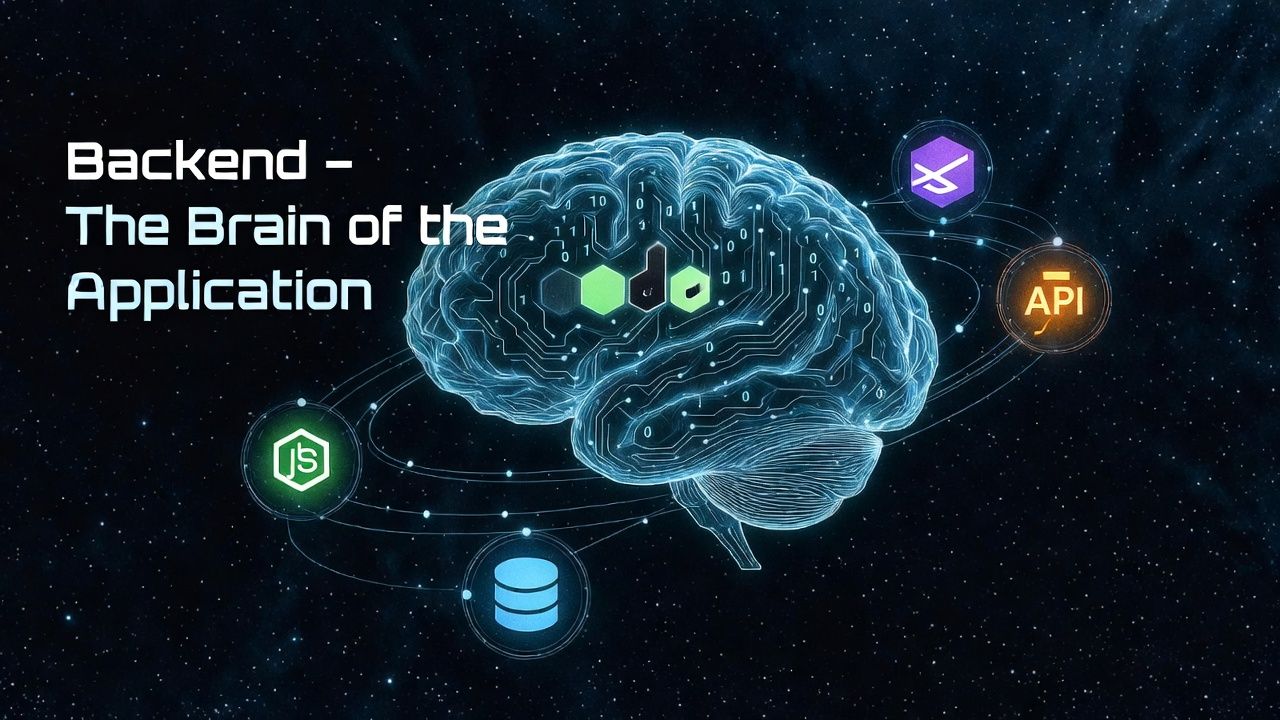
If the Frontend is the face of an application, the Backend is the brain. It is responsible for business logic, security, database management, and communicating with the outside world via APIs.
1. The Trinity of the Backend
Every backend system relies on three pillars:
A. The Language & Framework
A programming language (JavaScript, Python, Go) provides the logic. However, we use Frameworks to avoid reinventing the wheel.
- JavaScript → Express.js / NestJS
- Python → Django / FastAPI
- Java → Spring Boot
B. The Database (DB)
The DB is where data lives permanently.
An electronically stored, structured collection of data that can be easily searched, sort , update and retrieved. it can be images, words, numbers, files etc
Generally we use 2 types of database which is:
- SQL (Relational): Best for structured data (PostgreSQL, MySQL).
- NoSQL (Non-Relational): Best for flexible, JSON-like data (MongoDB).
Tip: We use ORMs/ODMs (like Mongoose or Prisma) to act as a translator between our code and the database.
C. The Server
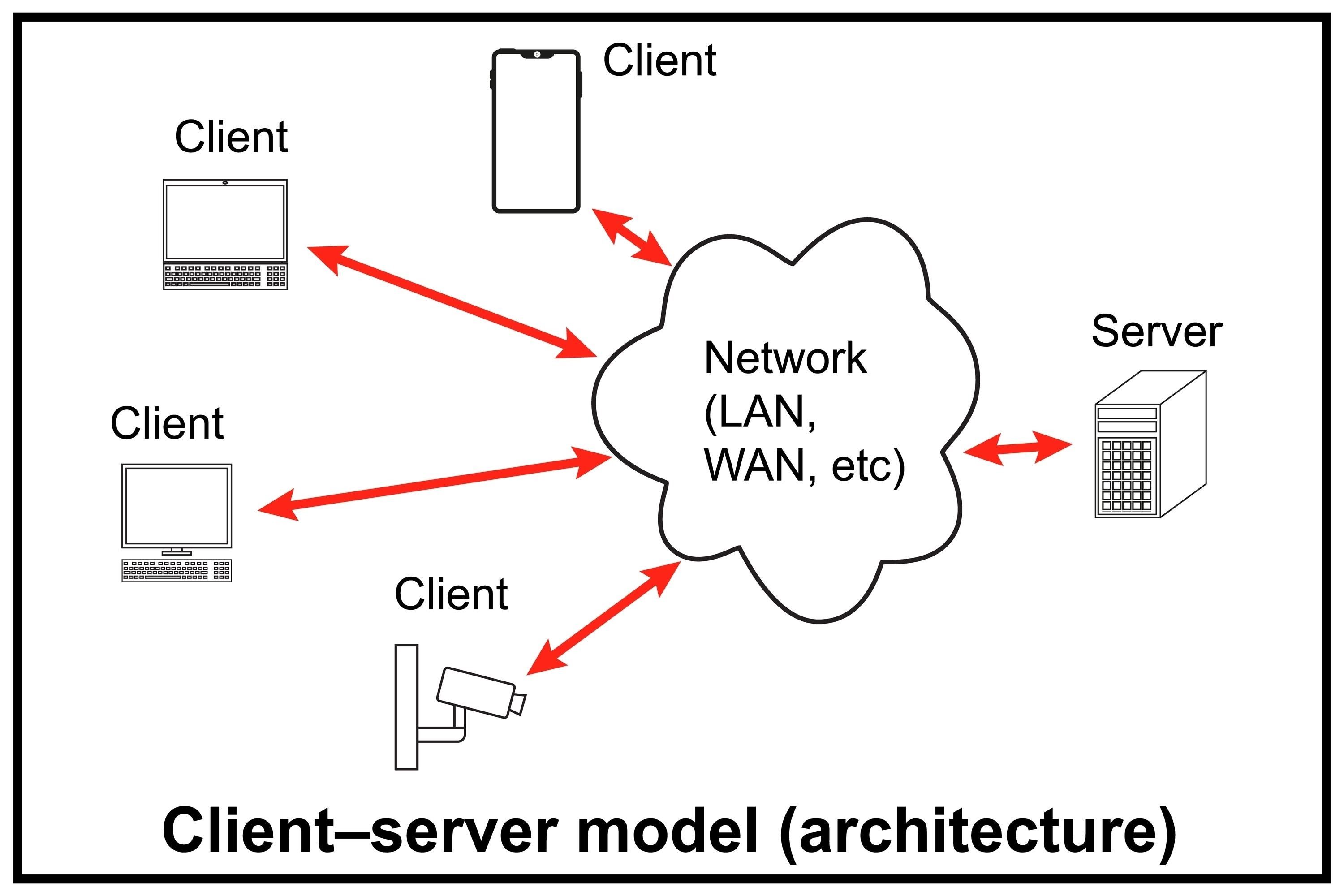
A server is simply a computer that "serves" data. It listens for requests 24/7. While you can turn your laptop into a server, in production, we use cloud providers like AWS, Google Cloud, or DigitalOcean.
A server can be a powerful, high-end machine, it is actually a role a computer plays. Even a regular desktop can act as a server if it's set up to share files, data or host a website.
2. APIs: The Communication Bridge
APIs (Application Programming Interfaces) are the messengers between server and client. It acts as a bridge between the frontend(Client) and backend. They allow for seamless communication and data exchange, enabling the user experience to stay dynamic and interactive.
APIs define the methods(POST, PUT, PATCH, DELETE etc) and data formats(json, images, html, files etc) that applications can use to communicate, enabling integration with other services and applications.
For example, when a customer adds a product to their cart on a website, the frontend sends this action to the backend through an API. The backend then updates the inventory and cart details, ensuring that the website displays the most current information. This interaction via API keeps the user experience smooth and the data accurate.
- Client (Browser) sends a request to an API endpoint (e.g.,
POST /api/add_to_cart). - API carries data to the backend and returns data to the client.
- Backend validates the user and updates the Database.
- API brings back a "Success" message to the Client.
| Aspect | Express.js | NestJS | FastAPI (Python) |
| Learning curve | Very easy | Medium | Medium |
| Type safety | No (unless TS) | Excellent (TypeScript) | Excellent |
| Best for | Quick APIs | Large enterprise | High-performance |

3. Anatomy of a JavaScript Backend (The Modern Stack)
In a Node.js/Express environment, your backend handles three types of "inputs":
- Raw Data: Strings, Numbers, JSON objects.
- Files: Media like images, videos, and PDFs (often stored in S3/Cloudinary).
- Third-Party Services: Stripe for payments, Twilio for SMS, or Google Maps for location.
A basic folder structure for backend
backend-project/
├── public/               # Static files (images, temp uploads)
├── src/
│   ├── index.js          # Entry point – starts server & connects DB
│   ├── app.js            # Express setup (middlewares, routes)
│   ├── constants.js      # Constants, enums, config values
│   ├── db/               # Database connection
│   ├── models/           # Data models
│   ├── controllers/      # Business logic
│   ├── routes/           # API routes
│   ├── middlewares/      # Auth, logging, etc.
│   └── utils/            # Helpers & utilities
├── .env                  # Secrets & environment variables
└── package.json
In Part 2 we’ll actually build a small auth + CRUD API step-by-step with Node.js, Express, MongoDB and proper error handling.
Subscribe so you don’t miss it!
The Evolution of MERN: Why I Choose It for Enterprise Solutions
Top Linux Commands Cheat Sheet 2026: Navigation, Files, Processes & More